Showing posts with label Literature. Show all posts

Friday, 20 September 2013

Why I hate the Glass Bead Game

Games are designed to stimulate the mind. Chess has proved a long-lasting, peaceful substitute to, and simulation of, the brutal necessities of war. Although a simulation, games possess an inner logic which means that they can also be a substitute for reality. Addiction to computer games is now treated in clinics. Whether virtual reality/ integration is a mere game or an ontology is yet to be posed, but will be once the technology is sophisticated enough.

The glass bead game is a game of extraordinary elegance and freedom. It is an abstract rubric in which players range across human cultural history for material they can use in their 'moves.' The game is a product of a future Europe which has reached the end of its useful productive cultural life. In this way, Das Glasperlenspiel shares the cultural pessimism of Oswald Spengler, but replaces Spengler's vision of a future in which 'Caesarism' triumphs over culture with a future in which monastic-scholastic contemplation triumphs over experience. Although we do not know to what extent this monasticism exists as a general phenomenon or a peculiarity of the province in which glass bead game players study and play, the book gives us this alternative vision as a political solution to Spengler's problem, which was playing itself out in WWII as Hesse wrote the novel.

I get the feeling from Das Glasperlenspiel of a writer who has utterly repudiated his age, but who wishes to situate within it a retreat which is serene and intellectual and Spartan, and as aloof as Lhasa before the coming of the Chinese. It was published in 1943, so the age that is repudiated is the Third Reich. However, Hesse does not rejoice in the freedom that would be gained in the wake of the curtailment of the thousand-year regime, but instead replaces the discipline meted out under the swastika with a different kind of discipline. In the novel, the Castalians are the disciplined acolytes of the Game. They do not get married; they do not experience desire; they are not even creative in the ordinary sense of that word. They are merely conscientious scholars of world culture. The glass bead game itself is played under conditions of total renunciation. The world outside the kingdom of Castalia is only raised as a political threat to their monkish way of life; never as a temptation (as in, for instance, Kazantzakis's The Last Temptation, as well as most other ‘ascetic’-type communities such as the Amish). Hesse would have us believe that no one would want to go out into the world outside once they have been introduced to the purity of the Game.

As a red-blooded young man, I doubt this, but then the crux of my argument is that such renunciation is bad. But what I don't doubt is that Hesse was ill in Nietzsche’s sense. He didn’t take the Judean route - rebellion, rabble-rousing against Rome (cf. Genealogy of Morals) - but the Buddhist one. Hesse wasn't a rebel; he was an ascetic.
Hesse was physically frail - he was rejected for combat duty in the Great War - a fact which must be borne in mind when reading this novel of intellectual dislocation and disembodiment and retreat. His reaction to war was to move away from Germany to Switzerland - after the Fatherland lost the Great War, as if protesting against militarism by protesting against the distinctly non-militarist Weimar Republic was a bold gesture. Twenty years later, his plan for facing off against the Nazi regime was exactly the same as his support for Weimar - to stay exactly where he was. In Switzerland. Hesse's 'politics of detachment' was the politics of extreme individualism: 'Every Buddhist for himself'. Contrasted with that other Nazi-'detachee' Ernst Jünger, it is difficult to respect Hesse. Jünger sought inner emigration in the Wehrmacht. Hesse in cuckoo land.

Jünger's preface to the 1929 English translation of In Stahlgewittern reads:

Time only strengthens my conviction that was a good and strenuous life, and that the war, for all its destructiveness, was an incomparable schooling of the heart.

Experience is hot-blooded, in its heights and its depths. Murder - but so too romantic love. War - but also the beauty of self-sacrifice. Hesse's glass bead game players are the apogee of selfish individualists turned away from the world into a private contemplation. What is worse is that the glassbead game players aim low: their contemplation is not of some mystical, difficult apogee of human existence - of God, for instance - but of something much more staid - high cultural history.

The full title of the novel should be: The Glassbead Game - the torpid spiritual life of academic fantasist Joseph Knecht.

Saturday, 2 March 2013

Call of Cthulhu and Lovecraft's themes: an essay (part 1)


"There are more things in heaven and earth, Horatio, than are dreamt of in your philosophy."


It is 1926.
The TV is demonstrated:


Mussolini is in power:

The General Strike takes place in the world's biggest empire:


The First War is a painful and recent memory of machines crushing men like insects and a whole generation of Europeans is raised almost fatherless. Communism has beaten off an international coalition and Stalin reigns supreme now that Lenin is dead. Oswald Spengler has already proclaimed in the wunderbuch of 1917 Decline of the West that the artistic and political culture of the West has petrified into an unalterable form of civilisation, of numbers and law-tables. Max Weber has identified the West’s administrative science of bureaucracy as an iron cage of an unfeeling, impersonal age. Franz Kafka has populated the iron cage with fictive victims. Freud sees cocks and fannies everywhere. Already more than forty years has passed since Nietzsche wrote the immortal warning, ‘God is dead.’ So to 1926: an American writer of pulp fiction named Howard Phillips Lovecraft writes a short story in the Gothic horror genre, called The Call of Cthulu.
Its publication in 1928 is not an historical event, but then works of genre – horror, romance, even science fiction – have never been historical events. Invariably genre works drop out of all but the history books of film, literature and stage as soon as the print is dry on the reviews. Whereas the near-contemporaneous Ulysses is talked about very much in terms of the historical context in which it was published; whereas the admittedly somewhat older Les Demoiselles d’Avignon is pointed at as a fateful ‘kink’ in art history’s path – so genre works are analysed generally without reference to the historical context in which they are created. Ulysses concatenates Freud, the death of god, the plethora of modern man’s leanings and his consequent exhaustion – it is timely; rechtzeitig. Les Demoiselles d’Avignon conjures up feelings of fragmentation and perspective which were thought – perhaps only subconsciously – but not yet expressed so forcefully. Perhaps that is the clue – art begets art. Cubism emerges from painting, bleeds into writing (Apollinaire, Faulkner, Wyndham Lewis); writing captures dream analysis and commits it to the canvas (Dali, Magritte); the news reels find their way into Dos Passos’s USA. Each cross-pollination provides extra momentum when viewed as Art with a capital ‘A,’ creating a sense of its own relevance and historicity.

But horror – a genre – remained mere entertainment, outside of the boundaries of serious art and a mere reflection of the times, not a commentary on them, as if entertainment could only unwittingly catch the diseases of the age and not diagnose them.
Works which have history on their side are specifically and consciously new pieces of work which challenge the canon; this is the way of art since at the latest the Romantic period in the late eighteenth century. A serious work of art separates its cause from its effect. By contrast, Chekhov’s Lady with the Little Dog, which Nabokov called the greatest short work in all Russian literature, is on the face of it a simple tale of forlorn attraction between strangers – a simple set-up which tells us that this story is not about new sensations or contraptions or geographies or creatures. To stretch the use of two of our ordinary terms, Lady with the Little Dog is ‘about’ forlorn attraction; its ‘proper sensation’ concerns something deeper, something which critics find more difficult to agree upon: modern alienation, perhaps; or hopes; or fate. It is this indeterminable quality which separates art from genre. It is quality which then separates accomplished works of art and genre from works which merely aspire to be art or genre, and which is outside of the ambit of this essay.

The horror genre – like all genre – is self-limiting. Its tropes almost anyone can enumerate with the minimum of fuss – and this in all probability is the cause of its being excluded from the serious arts. Horror plays to something primal and pre-existing in the human experience: horror is about what’s lurking in the shadows; it is about our fear of death; it is about our fear of the ugly and deformed. Lovecraft himself said that the ‘criterion of authenticity’ for a work of horror is ‘the creation of a given sensation,’[i] in which ‘proper sensations are excited.’ How? Through the creation of newer, weirder forms of dread. The history of the serious arts tells us that these are themes which need not do anything new in order to function correctly. Horror’s function is to create a sense of fear and foreboding, and sometimes terror. As a genre, it is autotelic. In beginning, middle and end, cause and effect are melded together into an alloy whose sole purpose is to ‘horrify’ the observer. The variety of modes and effects are what provides the genre its depth. The dread of a vampire – a charming parasite capable of reason, but cursed to live forever – and the terror of a zombie – Westernised as a fallen man, devoid of all reason and impelled by the slimmest residue of brute instinct – are qualitatively different modes and effects of horror. Crossover has long been part of the horror genre – theoretical battles set out by enthusiasts in a game which is not different in form from a debate between two philosophers about essence. What better represents the essence of horror – Frankenstein or the Wolf Man? Frankenstein meets the Wolf Man, Dracula versus Frankenstein – these two-for-ones are pitched like The Big Fight, each one a battle between different manifestations of the 'given sensation' of horror, each fight able to be settled only by the director's preference and the sympathies of the audience.


As a piece of Gothic horror fiction, this preamble is designed to show that the historicity of The Call of Cthulu is not in question – so why call it to account? The introduction is necessary because Call of Cthulu is as attuned to the spirit of the age as the invention of TV is the age in which it is created, and it has been ignored as such. Only if we understand the historical context in which it was written will be able to appreciate the subtleties of The Call of Cthulu – subtleties which, as will be shown, are ever more relevant as we moderns in our everyday lives sink ever deeper into fantasy worlds coloured more by rationality and, conversely, simulacra than by danger and risk and the weird.


[i] Lovecraft, Supernatural horror in literature.1. Introduction

Tuesday, 12 June 2012

Lionel Asbo: A story of England

The plot of Amis's latest sounds suspiciously like Barnaby Barford's artwork-narrative Big Win, reviewed here in April. Can anyone comment?

Saturday, 2 June 2012

Knut Hamsun's Growth of the Soil: a review

About a year ago I bought a house with my girlfriend - our first - and we decided to grow the garden from scratch. It was a new build, so the jardin was a clay mess, a crenellated turbid 'scape which would have furnished Otto Dix with enough material to fill in the blanks in his Alzheimered dotage.
This is what I did: I got rid of the detritus, the torn texile swatches of rubble-sacks, nails, breeze-blocks, bizarre twisted metal that looked as if it were from some autochthonous steampunk civilisation lost to history; I sowed out the stones and the rubble from the thinnest layer of soil-dust; I broke down the clay with my spade; I flattened out the craters from where the rubbish had been picked; I put down compost and sharp sand and fertiliser and grass seed; and - life came. Grass and earthworms and horrendous knotgrass and thistles and harlequin ladybirds ventured from the reclaimed wilderness. But it is my garden and I am happy.
I am Isak, forger in the wilderness, a rugged survivalist, a primitive ignorant of money and clock-time, but sympathetic to nature's time, the more fundamental time of organic life, regarding the changing seasons as my calendar and wrist-watch, completely attuned to the needs of the belly and the body, to man in his natural state, to the growth of the soil.


Yes, we at Burning Pyre also don't believe that soil grows, but what the fuck: Hamsun's book won him the Nobel Prize three years after its publication in 1917, back when the Prize was a Scandinavian gentlemen's club and before the word 'post-colonial' was coined.

By 1920, Hamsun had already written a swath of modernist texts, the most famous of which is Hunger, a book widely read today and arguably the bridge between dark Russian psychologism of the 19th century and the urban alienation of the 20th century. Like one of those writers, Celine, was later to do, Hamsun toured the US. To judge from Growth of the Soil, what he learned was hatred of money and love of the countryside.

So Hamsun wrote a novel about man in his totally natural, ahistorical state, what Spengler meant when he referred to the prehistoric skirmishes of the Cherusci or the Wolofs as a fight between ant colonies. History does not begin until there is a written chronicle; it falls away where there is no need for one. This is the ahistorical world of Isak.


- Some soil, yesterday

Of course, this doesn't mean that the novel is without events. Like the earth, the story moves through its own seasons, beginning with a preface redolent of 'spring', in which Hamsun explains how Isak created a simple dwelling and began to live off the land. Through Isak's determination and his own labour, he builds instead of mud a house of wood, buys livestock and settles down with a female who wanders onto his land, a woman called Inger, afflicted with a hare lip, but a modest companion and a hard worker.

Together, Isak and Inger start a family and all is fine until Inger births a daughter with a cleft palate. In true Aktion T4 style, she strangles it. In Hollywood, this would be the real opening of the story, the point at which the city-dwelling audience, torpid but unsated by an infinity of pleasures, ever-envious of what everyone else has, achieves the satisfaction it had been waiting for when it bites into the delicious apple-shaped schadenfreude of trouble in rural paradise. In Hamsun, Inger's cruel act is the hard fact of human nature that people are driven by desperation to do terrible things.

The murder is a doorway to the real theme of the novel, one close to Hamsun's heart and one increasingly difficult to grasp in the ever-urbanising West of the 21st century. Inger is imprisoned and returns home after a lengthy spell in the city prison, miles and worlds away from the remote rural setting of her Isak and her sons, with her cleft lip corrected, a daughter and, most crucially, a new Weltanschauung. Gone is the demure inverted-ingenue Inger, who displays the features of Hamsun's ahistorical tapestry of 'spring'; in her place is someone else, someone different - a self-conscious Inger, a world-weary, jaded Inger, a physically improved but morally degraded Inger, who feels herself above the work she had performed before she was incarcerated.It takes an act of gentle physical persuasion from Isak to set her back in her place with him. Inger withdraws and finds religion, but also re-assesses her values and falls in love again with Isak, the simple, plain master of the wilderness now called Sellenra. Strangers, opportunists come and go; the seasons metaphorically embedded in the narrative (Struggle - spring; enjoyment of fruits of labour - summer; upset - autumn; and the dark night of the soul - winter) cycle about like spokes on the wheel of Hamsun's narrative. What remains after everything is the strength of the growth of the soil - the power of land and toil.
Hamsun's tone, his on-and-off use of the present tense, evokes oral storytelling, the primary art of the ancient (pre-classical) Greeks and Celts and the timeless conduit of fables and proverbs. As a tale of rustic folk and the homestead it is as close as the late art of the West comes to a prose Hesiod. The first translator of the book, W Worster, said that 'a more objective work of fiction it would be hard to find.' The matter-of-factness of Hamsun's narrator, his description of the characters' feelings couched in conversational speculations but never demeaning them, pointed to a different kind of fate for Western literature, one which is echoed in the flatness of his partial-contemporary Hemingway's prose, but which never gathered enough pace to attack the muggy but creative psychologism of Joyce, the synaesthesia of Dos Passos and the ornate factual-fictional reminiscences of Proust. Growth of the Soil is anti-Impressionist and anti-Expressionist. It is the literary equivalent of Henri Rousseau, and therefore late in the unified theory of Western art, but timely nevertheless. With the bloodiest, most destructive war in history finished just over a year before the Nobel Committee's decision to award a novel so hostile to the idea of the city and its money and machines, it is no surprise that this point would have been considered insensitive if not pernicious to a wounded Europe's need to look to idyllic alternatives.

Hamsun's skepticism about the war and civilisation later led him to sympathise with Germany over England, with the tenets of Blood & Soil over the dogma of Capital. He refused to repent after the second war. His books remain in print and widely translated, such is the force of his vision.

Hamsun's Nobel acceptance speech:
http://www.nobelprize.org/nobel_prizes/literature/laureates/1920/hamsun-speech.html

http://www.hamsun.dk/uk/

Tuesday, 1 May 2012

Thomas Bernard's Correction: a review


1931-1989
 
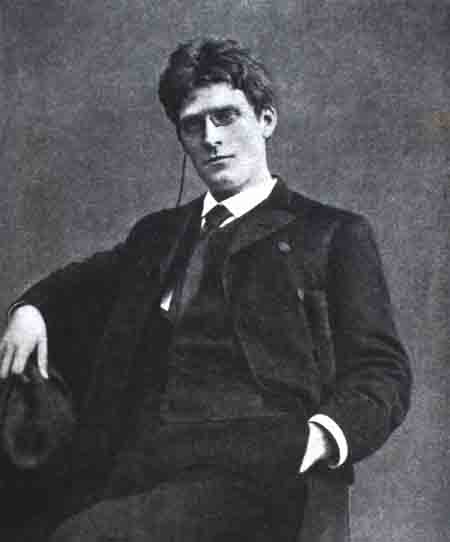
He looked a bit like James May, but Bernhard wrote dark shit nothing to do with cars or Jeremy Clarkson.

This novel, two long paragraphs recounting the work, life and death of a scientist-writer-architect-philosopher loosely based on Wittgenstein and written in 1975, is firmly within the dark (post)modernist wave of post-WWII art; a quintessentially unfilmable novel which escapes into the dark interstices where the writer melts into his subject matter as if he himself were a palimpsest and then breaches the overlay - be it reminiscences of youth or Roithamer's recondite script on his life, his family, the sister whom he loved and the mysterious edifice, the Cone - and surfaces again to remind us that this is a novel with an apparently reliable narrator.

The subject of the story is Roithamer. The nameless narrator and Hoeller, the childhood friend in whose garret Roithamer found the courage to complete the Cone, are merely wallpaper, Hoeller interesting wallpaper, whose pleasure is to stuff birds late at night in his workshop - or is it? Roithamer is no pointy-headed mentalist-genius in the Hollywood style (Shine, A Beautiful Mind, Pollock), but a man whose genius we are told to accept through his accomplishing the apparently impossible feat of building a cone-shaped structure in the middle of the Kobernausser Forest. And accept it we do, because - there is nothing else to grasp in this novel.

If the narrator is a palimpsest, ever abrading his will from the narrative, then Roithamer is a vessel for Bernhard's reflections on inevitability.

Napoleon said that the ancient concept of fate is replaced in the modern era with policy. Bernhard reminds us here that policy is determined fatefully - by quirks (by being born in Altensam), by predispositions (to over-analyse), by family ('the Erdfing woman'); that is, inescapably.


So far so bleak. Possibly more popular, but not as funny as Celine (but then Bernhard wasn't right-wing), Bernhard falls into the trap of all classically depressed/ dark artists - if he ever played a practical joke in his life his credibility would be over, instantly. Think Beckett (all turtle necks and fierce stares from that vulture-like visage), Robert Smith, Van Gogh, Schiele, etc., po-faced artists (and others) who, if they ever cracked a joke to their public, I mean a really funny, possibly even crass joke, they would be done. It wasn't ever inevitable that Bernhard would step outside of the aesthetic world he had created for himself and tell such a joke. After all, he stayed within his slightly abstract, nihilistic milieu right to the end.

This novel is beautiful like a plastic room designed by H.R. Geiger would be beautiful; but you wouldn't want to sit in it for long.

Neither Celine nor Bernhard had children. They didn't believe in humanity enough.

'The nights, Roithamer said, are always the worst. Everything is blown up out of all proportion, no matter how insignificant, at night it becomes monstrous, the most insignificant, the most harmless thing there is grows monstrous at night and won't let a man like me or Roithamer or Hoeller sleep.'


Some materials:

http://www.thomasbernhard.org/

http://moreintelligentlife.com/node/852