Saturday, 2 June 2012
Knut Hamsun's Growth of the Soil: a review
This is what I did: I got rid of the detritus, the torn texile swatches of rubble-sacks, nails, breeze-blocks, bizarre twisted metal that looked as if it were from some autochthonous steampunk civilisation lost to history; I sowed out the stones and the rubble from the thinnest layer of soil-dust; I broke down the clay with my spade; I flattened out the craters from where the rubbish had been picked; I put down compost and sharp sand and fertiliser and grass seed; and - life came. Grass and earthworms and horrendous knotgrass and thistles and harlequin ladybirds ventured from the reclaimed wilderness. But it is my garden and I am happy.
I am Isak, forger in the wilderness, a rugged survivalist, a primitive ignorant of money and clock-time, but sympathetic to nature's time, the more fundamental time of organic life, regarding the changing seasons as my calendar and wrist-watch, completely attuned to the needs of the belly and the body, to man in his natural state, to the growth of the soil.
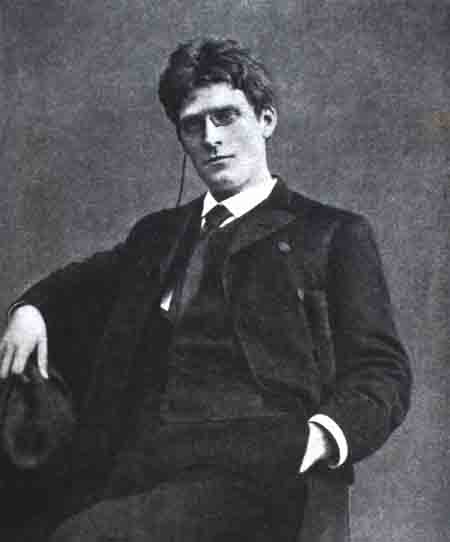
Yes, we at Burning Pyre also don't believe that soil grows, but what the fuck: Hamsun's book won him the Nobel Prize three years after its publication in 1917, back when the Prize was a Scandinavian gentlemen's club and before the word 'post-colonial' was coined.
By 1920, Hamsun had already written a swath of modernist texts, the most famous of which is Hunger, a book widely read today and arguably the bridge between dark Russian psychologism of the 19th century and the urban alienation of the 20th century. Like one of those writers, Celine, was later to do, Hamsun toured the US. To judge from Growth of the Soil, what he learned was hatred of money and love of the countryside.
So Hamsun wrote a novel about man in his totally natural, ahistorical state, what Spengler meant when he referred to the prehistoric skirmishes of the Cherusci or the Wolofs as a fight between ant colonies. History does not begin until there is a written chronicle; it falls away where there is no need for one. This is the ahistorical world of Isak.
- Some soil, yesterday
Of course, this doesn't mean that the novel is without events. Like the earth, the story moves through its own seasons, beginning with a preface redolent of 'spring', in which Hamsun explains how Isak created a simple dwelling and began to live off the land. Through Isak's determination and his own labour, he builds instead of mud a house of wood, buys livestock and settles down with a female who wanders onto his land, a woman called Inger, afflicted with a hare lip, but a modest companion and a hard worker.
Together, Isak and Inger start a family and all is fine until Inger births a daughter with a cleft palate. In true Aktion T4 style, she strangles it. In Hollywood, this would be the real opening of the story, the point at which the city-dwelling audience, torpid but unsated by an infinity of pleasures, ever-envious of what everyone else has, achieves the satisfaction it had been waiting for when it bites into the delicious apple-shaped schadenfreude of trouble in rural paradise. In Hamsun, Inger's cruel act is the hard fact of human nature that people are driven by desperation to do terrible things.
The murder is a doorway to the real theme of the novel, one close to Hamsun's heart and one increasingly difficult to grasp in the ever-urbanising West of the 21st century. Inger is imprisoned and returns home after a lengthy spell in the city prison, miles and worlds away from the remote rural setting of her Isak and her sons, with her cleft lip corrected, a daughter and, most crucially, a new Weltanschauung. Gone is the demure inverted-ingenue Inger, who displays the features of Hamsun's ahistorical tapestry of 'spring'; in her place is someone else, someone different - a self-conscious Inger, a world-weary, jaded Inger, a physically improved but morally degraded Inger, who feels herself above the work she had performed before she was incarcerated.It takes an act of gentle physical persuasion from Isak to set her back in her place with him. Inger withdraws and finds religion, but also re-assesses her values and falls in love again with Isak, the simple, plain master of the wilderness now called Sellenra. Strangers, opportunists come and go; the seasons metaphorically embedded in the narrative (Struggle - spring; enjoyment of fruits of labour - summer; upset - autumn; and the dark night of the soul - winter) cycle about like spokes on the wheel of Hamsun's narrative. What remains after everything is the strength of the growth of the soil - the power of land and toil.
Hamsun's tone, his on-and-off use of the present tense, evokes oral storytelling, the primary art of the ancient (pre-classical) Greeks and Celts and the timeless conduit of fables and proverbs. As a tale of rustic folk and the homestead it is as close as the late art of the West comes to a prose Hesiod. The first translator of the book, W Worster, said that 'a more objective work of fiction it would be hard to find.' The matter-of-factness of Hamsun's narrator, his description of the characters' feelings couched in conversational speculations but never demeaning them, pointed to a different kind of fate for Western literature, one which is echoed in the flatness of his partial-contemporary Hemingway's prose, but which never gathered enough pace to attack the muggy but creative psychologism of Joyce, the synaesthesia of Dos Passos and the ornate factual-fictional reminiscences of Proust. Growth of the Soil is anti-Impressionist and anti-Expressionist. It is the literary equivalent of Henri Rousseau, and therefore late in the unified theory of Western art, but timely nevertheless. With the bloodiest, most destructive war in history finished just over a year before the Nobel Committee's decision to award a novel so hostile to the idea of the city and its money and machines, it is no surprise that this point would have been considered insensitive if not pernicious to a wounded Europe's need to look to idyllic alternatives.
Hamsun's skepticism about the war and civilisation later led him to sympathise with Germany over England, with the tenets of Blood & Soil over the dogma of Capital. He refused to repent after the second war. His books remain in print and widely translated, such is the force of his vision.
Hamsun's Nobel acceptance speech:
http://www.nobelprize.org/nobel_prizes/literature/laureates/1920/hamsun-speech.html
http://www.hamsun.dk/uk/
Sunday, 20 May 2012
Romanzo Criminale: La Serie 1 – a review
To judge from the credits alone - brief glimpses of shades-wearing men having seedy conversations; shots of wads of lira; guns - RC is either a shitty cheesy crime drama set in the 70s in the vein of the Professionals, or a cool Goodfellas-style fast-paced anthropological study of Italian crime in Italy. Even the promo photo looks shit. Happily, this story of the real-life Banda della Magliana is neither; fortuitously, it is the greatest TV programme maybe ever.
It is a bildungsroman of a gang, centring on its leader, small-time hood Lebanese, who lives in a small caravan by the Tiber. Inevitably, he forges alliances with local hoods and runs risks with dogged determination as they come up against better-connected foes and the sinister Camorra. So far so Scarface. But we who know little about the Banda in advance of its screening are never given the sense that their rise to power will be inevitable in the same sense as a Hollywood gangster epic. Limited by their running time, the big screen bildungsroman defaults to vignettes, presenting the trajectory of character in a single unvarying gradient, always seeming like an abridged biography retold by an omniscient narrator. Romanzo Criminale's format, whilst conforming to type with its 12 intriguing introductions and 12 cliff-hanger endings, allows many twists and set-backs and seems much closer to a geniune thriller than a morality tale, which is effectively what Scarface, Goodfellas, et al. are. In fact, the gang's transition from small-time hoodlumry to the big stage establishes once and for all supremacy of the novel and the TV series over story, film and stage in matters of exposition.
Most interesting is the fact that RC is set during Italy's anno di piombi. This is the most triumphant detail in the series. The historical gravitas of Italy's torrid recent past elevates Criminale way, way above run-of-the-mill crime dramas and makes HBO centrepieces like the Sopranos look like a dreary soap-opera and Life on Mars like the fantasy it is (people with no historical sense have compared it to both). The series begins like the flashbacks in Godfather Part 2 and hits another level when Aldo Moro is kidnapped by the Red Brigades. It is the crucially-important historical backdrop which makes the Italian state itself - in the form of the shady secret service, the identity of whose acolytes we see interspersed throughout the series, is only very slowly revealed - complicit in breaking the rule of law in exactly the same way as the Banda did. They are morally equivalent, these murdering thieves from the poor part of Rome and the security service, the writers tell us. The facts bear out the claim.
BP wasn’t alive to experience the 1970s in Italy, so we will refrain from posturing about its historical authenticity, but it looks and feels like a different, grubbier, less technologically sophisticated era and one familiar from archive footage. We know that the 1970s in Western Europe saw serious threats to the established order in the form of Communism, trade unionism, terrorism (Red, Black and anti-colonial) and, perhaps most of all, the Yom Kippur War and the resulting oil crisis of 1973. The piece of the pie seemed to get smaller across the West. A new, grubbier realism set in after the optimism of the 60s. It even saturated Hollywood. Watergate happened. Baader-Meinhof were running crazy across West Germany. The British army were shooting civilians in Ulster. Men were dressing up as women and pretending to be space aliens with 1950s’ licks. The US pulled out of ‘Nam, unable to defeat a determined army of peasants with AKs. Were the liberal values of the West falling apart? Was Communism going to take over?
The Years of Lead as presented in Criminale show the audience that Italy, far from being the land of fashion, pasta and football familiar to English-speaking contemporaries, was - is - an intensely political nation divided, like much of Europe, into three camps by its reaction to Anglo-capitalism. Firstly, the left, the Red Brigades and Anarchists, who kidnapped and murdered the Prime Minister of Italy, Aldo Moro in 1978 (we are given a glimpse of this through Inspector Scaiola's relationship with his Red sister); then the right, the fascists and Mussolini revivalists, whom we see when the fascist adventurer Nero (brilliantly played by an Iggy Pop lookalike) needs someone to launder his money; and finally, the centre, the dominant party of acquiescent capitalists after the fall of Mussolini, typified by Berlusconi. It is in the centre where the Banda (in spite of its links to NAR) and their nemesis Inspector Scaiola exist. The Banda believe in money, Scaiola in reason, together the two values uniting the centre faction: capital and law, the means of enforcing capital. By contrast, the secret service seem like out-of-control puppet masters, unsure which marionette to play with more. According to the producers, they played the Banda over Scaiola and the Right over the Left. But they don’t want more money and, as far as we can tell, they don’t want a second Duce.
The dichotomy between rifht and left resolved itself and the Years of Lead ended, but not before 85 people were blown up in Bologna. So, what of the era hinted at by the end of the first series of Romanzo? Governments calmed down, or got better at covering themselves up. The populace was tired of terrorism and pacified by the financial boom of the 1980s. Liberal markets triumphed across most of the world in 1991; Kojeve’s end of history thesis came to fruition. Francis Fukuyama updated it with an audacious piece of backwards clairvoyance. Markets opened up to freer trade. Governments trusted each other to be more predictable than in the 70s and real political choice between Red, Black and Centre was replaced with consumer choice. Companies, too, reacting to legislation to better secure national income, sought to make revenues more predictable, employing Black-Scholes and the personal computer to master the future and conquer risk (suggested further reading: Galbraith’s Affluent Society).
We live in a world a start-up Banda would have dreamed of – the approval and promotion of crass materialism, the ability to get-rich-quick and the chaos of globalisation as a smoke screen for their underworld activity. If the NAR or the CPI had got into power, they would have been toast.
More on the Banda:
http://en.wikipedia.org/wiki/Banda_della_Magliana
Thursday, 26 April 2012
Famous historical fights: Gramsci vs. Il Duce
Wednesday, 2 April 2008
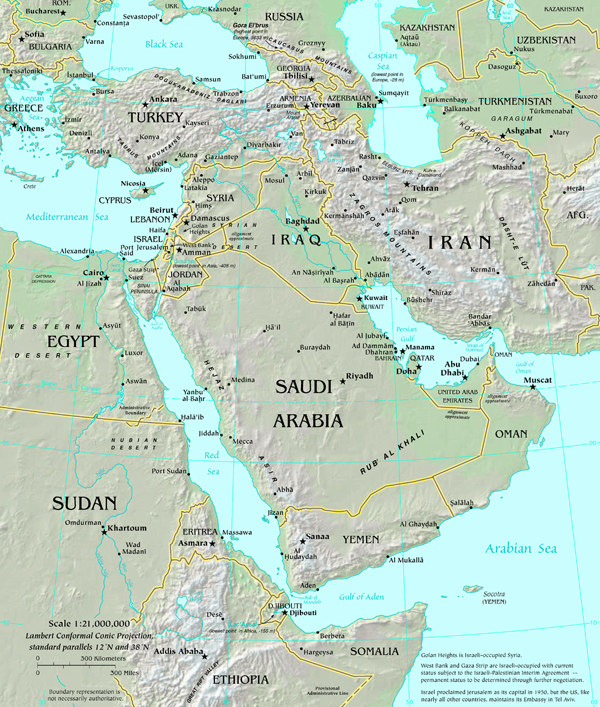
US 'gearing up to attack Iran', says Russia
Iran is three times the size of Iraq.
http://www.world-maps.co.uk/maps/600-middle_east.jpg
Sunday, 16 March 2008
Spengler Reconsidered (1997) - Part 5 (final part)
Cultural Totalities
Since Spengler's doomsaying, and indeed his whole system, depend on this cultural monism, the most effective response is not to compete in prophecy by predicting either an everlasting one-world civilization or a comfortable chaos, but to demonstrate the pluralism of any culture past or present. The more autonomous (though connected) activities one can identify in a culture, the less likely it becomes that all of them were foreordained to climax and decline in unison.
That was the approach taken by Alfred Weber (Max's brother) right from 1921. Weber accepted the Spenglerian morphology of cultures, each with its own soul or set of symbols and all affected by a cycle of productivity and stagnation. But this, said Weber, was only one strand of history, alongside two others, which he called the social process and the civilization process. That tripartite division reappeared in Daniel Bell's The Cultural Contradictions of Capitalism (1976), as the three autonomous "axial principles" of contemporary society: the culture, the political order, and the technical/economic system. Their disjunctions and contradictions, their different "rhythms" and rates of change (plus the fact that the last-named, unlike the first, is cumulative) make Spengler's inexorable doom scenario highly improbable in the absence of external forces. By now, of course, we have gone beyond doomsaying to the second leading idea of The Decline of the West, the notion of cultural totalities.
Arnold Toynbee thought that Spengler's vision of a culture (he called it a civilization) as a closely knit unit with a characteristic soul was "an insight of genius", but no one else has had much use for this Hegelian self-developing essence immune to external influence. (Toynbee, incidentally, piled another mountain of erudition on to Spengler's system but at each crucial point in the argument he introduced inconsistency, triviality, or religiosity, so that his twelve volumes are negligible for the further treatment of Spengler's main ideas.) Twentieth-century scholarship was intolerant of monist abstractions and its whole drift was toward a pluralist and realistically untidy notion of a culture, a civilization, or a society. Clifford Geertz exemplified this in The Interpretation of Cultures (1973) when he said that the network of interdependencies within a culture - some direct, others indirect, some practically negligible - did not constitute a rigid system. Therefore there could be no "heroic 'holistic' assault upon the 'basic configurations of this culture', an overarching 'order of orders' from which more limited configurations can be seen as mere deductions." Put "symbols" in place of "deductions" and there goes Spengler's soulful, essentialist culture.
Nevertheless, and respecting as far as possible this tentative approach, there gradually arose after Spengler a sustained interest in what was variously called the science of civilizations, culturology, or comparative macrosociology. For this purpose, it was accepted that large supra-national cultural units can display enough unity or common style to allow of generalization and comparison. What was not taken over from Spengler was the metaphysical prejudice that such units were self-unfolding essences, of which the life-course was foreordained by a unique character or destiny. And there was no patience with the idea that each life-course was rigidly periodized into comparable stages that permitted of analogy and prediction.
Spengler gave the "civilizationists" their subject but not their method. That method is usually positivist, in the manner of "social science", though anthropologists like Alfred Kroeber (Configurations of Culture Growth, 1944) and sociologists like Pitrim Sorokin (Social and Cultural Dynamics, 1937) were not systematically opposed to Spengler's intuitive insights into the styles of various cultures. All these approaches are seen in the proceedings of the International Society for Comparative Study of Civilizations, whether of its first conference in 1961 (The Problems of Civilization, edited by O. Anderle, 1964) or of its meetings from 1978 and 1986 (The Boundaries of Civilizations in Space and Time, edited by M. Melko and L. Scott, 1989). Melko recalls that Spengler's culture morphology was at first overwhelmingly rejected, as dealing in "fictitious entities." He then adds:
But time has given a different answer. Many historians write today with a sharpened awareness of cultural integration and characterization. They seek relationships between politics, economics, and aesthetics, and they dismiss cause-and-effect political history as out of date, something that belongs to the nineteenth century. What they have rejected in the system-builders is their dogmatic periodization. The basic concepts have stood. Civilizations do have meaningful inner relationships, they can be characterized, they can be distinguished from one another.
While the comparative study of civilizations is not yet exempt from acerbic criticism by traditional historians averse to abstraction and generalization, it is striking that their occasional jousts with the civilizationists (and with Toynbee) do little more than repeat the arguments of the controversy unleashed in Germany in the 1920s by The Decline of the West. Then, and later, the element in Spengler's theory that aroused most intense opposition, even scorn, was the assertion that cultures are incommensurable, they have no common standards, they cannot understand or influence each other, and their very science and mathematics are culture-bound. They are monads without windows. It was easy to show that this argument was self-destructive, for how could the Faustian Oswald Spengler know so much about past cultures, not to mention the hundreds of thousands of Faustians who read his book? But instead of self-destructing, cultural relativism prospered as one of the most successful ideas of the twentieth century.
Spengler was not the sole inventor of this field of study. It was formed by the confluence of several tributaries, of which Spengler's book was one. It was powerfully encouraged by Marxism's totalizing approach, by functionalism and then structuralism in anthropology, and by systems analysis in social science - as well as by the concern of UNESCO (which financed the above-mentioned conferences) to put peripheral "cultures" on a footing with dominant Western civilization. The relativist tendency of historicism was available to be taken to outright skepticism once Wilhelm Dilthey's vague dream of a philosophical synthesis of social perspectives was abandoned. The Marxist reduction of much culture to class-bound ideology (bourgeois justice, bourgeois science, proletarian art) was a pervasive relativist influence. But Spengler pushed the relativist paradox to the furthest limit, not just to a solipsism of cultures but, since each culture had successive stages that similarly could not understand each other, truth was forced back to ever more restricted social redoubts. When the quite uncontrolled appellation "culture" was transferred from Spengler's vast Hochkultur to petty tribal cultures and thereafter to such vacuous notions as youth culture, counterculture, gay culture, and feminist culture, the number of groups ready to claim cultural isolation became legion.
Academic philosophers were at hand to turn this declension into dogma. Take the case of Michel Foucault. Right from Les Mots et les choses, Foucault said that in place of history he would put an archeology; in place of continuities, traditions, influences, causes, comparisons, and typologies, he would put ruptures, discontinuities, and disjunctions. He would privilege the differences rather than the similarities between the various epochs of the history of consciousness. So regarded, the history of culture loses its narrative and falls apart into "epistemes" or knowledge systems that do not evolve or cumulate; they simply appear alongside one another without rhyme or reason, like Spengler's cultures. Science and culture lose all continuity because, Foucault asserts, there have been several great epochs of epistemic coherence in modern times and the ruptures between them are so profound that they are isolated from one another, untranslatable one into the other, in a word, incommensurable. Each "epistemic field" lives a plant-like cycle until it collapses and is replaced by another in blind succession. The demise of our own particular episteme is nigh and its successor is unpredictable (which incidentally rules out political activity aimed at influencing it, because we could not understand it from within the prison of our episteme).
Critics saw that this was a Spenglerian construction; "melange instable de Spengler et Heidegger", said Michel Amiot, while Hayden White saw in it the same isolating intention as in Spengler, the effort to "effectively isolate men within different, not to say mutually exclusive, universes of discourse, thought and action."(7) Once "we are isolated within our peculiar modalities of experience", then thought is led "into the interior of a given mode of consciousness, where all of its essential mystery, opaqueness and particularity are celebrated as evidence of the irreducible variety of human nature."
The social implications of this bizarre epistemology come readily into view. It is a further step in what Lucien Febvre called the breaking up of "the immense empire of civilization into autonomous provinces." Civilization, truth, and human nature itself are to be fragmented in space and in time. The dethronement of a dominant and supposedly dying Western culture led first to tolerance of other cultures and then, thanks to the absence of any standards (dismissed as "meta-narratives"), to the elevation of any style or pathos that cared to clamor for equal time. From Spengler's eight or nine high cultures via Toynbee's twenty-odd civilizations we arrived at the melee of pathetic particularisms, each complaining "You don't understand me."
If the west were to decline, this could be one way it would go down; but it is hard to believe that a vast civilization that has at its simultaneous disposal (pace Spengler) all the resources of both the classical and the modern scientific cultures could be brought low by disruptive policies that cannot even state their intellectual basis without self-contradiction. Sir Isaiah
Relativists, Spenglerians, positivists, deconstructionists are wrong: communication is possible between individuals, groups, cultures because the values of men are not infinitely many; they belong to a common horizon - the objective, often incompatible, values of mankind, between which it is necessary, often painfully, to choose.(8)
So the conflicts that cultural relativism pretends to explain are not really about communication and understanding but about conflicting choices, contradictory policies, incompatible intentions. To allow that they are all equally objective and, given patience, understandable is not to surrender to any one set of policies as canonical, compulsory, or alone properly human. Quite the contrary, discarding Spenglerian relativism and monism, and their contemporary "post-modern" variations, is a prerequisite to effective criticism of solidarism and other cultural frauds.
1 Matthew Melko, The Nature of Civilizations (Boston: Porter Sargent, 1969).
2 Walter Isaacson, Kissinger: A Biography (New York: Simon & Schuster, 1992). Isaacson says in a note (p. 776), "Spengler also fascinated Paul Nitze, who in the late 1930s quit his Wall Street job to go to Harvard and study The Decline of the West."
3 Published with a preface by Arnold Toynbee in
4 "The Rise of American Decline", Commentary (May 1988).
5 Richard D. Lehan, F. Scott Fitzgerald and the Craft of Fiction (Carbondale, IL: Southern Illinois University Press, 1966).
6 Franz Borkenau, End and Beginning: On the Generations of Cultures and the Origins of the West (New York: Columbia University Press, 1981).
7 Michel Amiot, "Le Relativisme culturaliste de Michel Foucault" in Les Temps Modernes (January 1967); and Hayden White, "Foucault Decoded: Notes from Underground", History and Theory, vol. 12, 1973.
8 Ramin Jahanbegloo, Conversations with Isaiah
Monday, 10 March 2008
Genius sometimes comes cheaply

... or free, as the case may be: the entire text of Kojéve's Introduction to the Reading of Hegel available here.
Kojéve contends that Hegel’s work is really about man’s struggle to be autonomous, to achieve ‘satisfaction’ in overcoming the Other to whom he is beholden, be it God or capitalism or the socio-historical archetype of the Master. Kojéve congealed the unfolding of history as depicted in (and includes the publication of) the Phenomenology of Spirit and took his cues from there.
The problem of man’s satisfaction is one of the greatest raised by the debate surrounding the Phenomenology. Is Man satisfied in achieving self-consciousness? Is Man satisfied in achieving a self-mastery that is beholden to no one? Is Man satisfied momentarily in the achievement of self-consciousness? Kojéve seems to deny the basis of man’s experience as radically free, or ‘thrown’. How is Man to live in his ‘satisfaction’? - that is the question that is posed in the last chapter of Kojéve's book. And Kojéve seems to be saying - we’ve arrived at the problem of Nietzsche’s Ultimate Man; but that means that Kojéve has regressed some fifty years in the history of thought.
Tuesday, 12 February 2008
Oswald Spengler Reconsidered (1997) - Part 4
For Spengler, cultures did not clash; they succeeded and misunderstood each other. A culture did not meet its fate accidentally, for example by going down to a rival culture, but inexorably, by aging into a war-torn and degraded civilization. The very different clash-of-cultures theory was represented in his day by the Polish philosopher Feliks Koneczny in his book On the Plurality of Civilizations.(3) Koneczny (1862-1949) dealt with civilizations as "the largest extant fractions of humanity", above states and nations (what Spengler called cultures); and he agreed that "Historically and sociologically there is no such thing as mankind." But he held that cultures inevitably conflict, struggling until one or the other is destroyed. Peaceful interpenetration could lead only to bastardization. ("There are no syntheses only poisonous mixtures. . . . We cannot be civilized in two different ways.") So he dismissed Spengler out of hand: "I do not know of a greater absurdity than the doctrine of the fall of civilizations as a result of old age; the Jewish and Chinese go on."
Samuel Huntington revived these notions in less bellicose form in his 1993 article in Foreign Affairs, "The Clash of Civilizations": "Differences do not necessarily mean conflict, and conflict does not necessarily mean violence. Over the centuries, however, differences among civilizations have generated the most prolonged and the most violent conflicts." And he believes that we are in for more of it: "It is my hypothesis that the fundamental source of conflict in this new world will not be primarily ideological or primarily economic [but] cultural", that is, the clash of cultures.
A different misuse of Spenglerian terms characterized the late Cold War. When Hans Morgenthau wrote "The Decline of the West" in Partisan Review in 1975, when David Ormsby-Gore (Lord Harlech) wrote Must the West Decline (1966), or when a score of publicists similarly echoed Spengler, they were thinking of a different "West" (usually NATO) and were concerned with matters of strategy and Great Power rivalry far removed from Spengler's concerns. And when Paul Kennedy studied The Rise and Fall of the Great Powers from an unprofitably narrow economic angle, he was the anti-Spengler in his indifference to the soul and style of cultures. To their credit, neither Spengler nor Toynbee ever mistook the
inally, Spengler was invoked by those who took "the West" to mean "the white race", and its decline to consist in eclipse by some other race, be the peril yellow, black, brown, or brindle. There is not a word of this in The Decline of the West. True, Faustian man seems very Germanic, but Spengler had an unflattering opinion of other "whites", notably Russians, Italians, and Spaniards; while in the political tracts, the enemy is England. He warned of the danger to Western manufacturing industry from cheap Asian labor, in terms similar to those Sir James Goldsmith uses today. But none of this was part of his scenario for decline; and it would have contradicted his theory of the meaningless succession of cultures for him to pretend to predict where the next one would arise, for that was Incident, not Destiny. That did not prevent Arturo Labriola from claiming that he was following Spengler in his Le Crepuscule de la civilisation: l'Occident et les peuples de couleur, where he made the apocalyptic prediction that a struggle between colored races and European imperialism was about to destroy civilization. Labriola was closer to Koneczny in his view that cultures are necessarily aggressive and destructive; to be sure, his undated book seems to have been written in 1936, when the world looked that way.
More significantly, Labriola admits that his ideas "coincide with Lothrop Stoddard's book." Stoddard is a name seldom heard today, though it crops up in an unexpected place, The Great Gatsby. F. Scott Fitzgerald wrote to Maxwell Perkins (The Letters, pp. 289-90), "I read [Spengler] the same summer I was writing The Great Gatsby and I don't think I ever quite recovered from him. He and Marx are the only modern philosophers that still make sense in this horrible mess." He went on to quote Spengler's description of the brutal, ruthless, uncultured realism of late civilized man, and it is possible that Fitzgerald was thinking of this when he depicted the "monied thugs" of his novels, especially Tom Buchanan in The Great Gatsby. But Richard D. Lehan went much further and decided that Spengler's "influence on [Fitzgerald's] work is so great that it is amazing that it has so long been overlooked."(5) He developed a Spenglerian interpretation of the three principal novels: Dick Driver's career in Tender is the Night parallels the decline of the West; Faustian man fights it out with the new Caesar in The Last Tycoon; and Gatsby is the last Faustian, the man of infinite desire. There is even the preposterous suggestion that the narrator's reflection that Gatsby and the characters around him "were all Westerners" refers not to their status in East Coast society but to Spengler's declining West.
What we know for sure is that the villain of The Great Gatsby, Tom Buchanan, urges people to read a book called "The Rise of the Colored Empires by this man Goddard." There is no such book but Fitzgerald gives us a clue when a drunk pulls a book at random off Gatsby's shelves and it is "the Stoddard lectures." So the reference is to Lothrop Stoddard's The Rising Tide of Color Against White World Supremacy, an archetypal yellow peril potboiler. The narrator later calls it "stale ideas" and thinks it revealing that Buchanan would be obsessed by such stuff. So Fitzgerald knew his Spengler well enough to conclude that the prophecy that Western culture would be swamped by the colored races was an idea fit for roughnecks.
None of the foregoing reactions to the decline thesis constitutes an answer to Spengler's prophecy, but of course such answers were not lacking. The first and most often advanced was that science and technology have put Western culture into a different case from all preceding cultures, thus postponing the doomed collapse, breaking the cycle of the civilizations, and converting Western culture into world culture. R.G. Collingwood, in his 1927 review of Spengler in Antiquity, ruled that there is no longer "a mere plurality of cultures, but a unity of that plurality, a unity which is the present culture, the heir of all the past."
Progress theorists have taken the same line ever since, especially in
Without necessarily disagreeing, not everyone was enthusiastic about this promised end of separate civilizations. Ludwig von Bertalanffy said that Spengler had been a true prophet but that his "enormous cycle of history is now accomplished", thanks to "globality and technology which, in a way, explode the cyclic scheme" to introduce "a global technological mass society in which old cultural values and individual creativity are replaced by . . . a Brave New World of affluent mediocrity . . . a post-historical age" (Perspectives on General System Theory, 1975).
Another response to Spengler's doom-saying was, roughly speaking, "What's wrong with a bit of doom? Cultural collapse never hurt anyone!" This idea runs back to Vico, who thought that over-refined, vicious, and "effeminate" societies could be reinvigorated by a relapse (ricorso) to primitive religion and heroic barbarism. It was taken up in our day by that lonely genius, Franz Borkenau, who thought that "Spengler is by no means 'done with'" and that his argument had not been answered.(6) In particular, he averred, the fury directed at the "prophet of doom" sprang from "a mixture of self-deification and a fear of death transposed to society." In fact, said Borkenau, the cycle of cultures had not ended and could not, for "history knows no resting point in this up-and-down pattern." A fall into barbarism was no disaster, and could be revivifying; indeed, "the more profound the barbaric downfall, the more creative the subsequent culture." Taking a cheerful view of the supposedly approaching chaos, Borkenau wrote: "For such is the paradox of human affairs that men, by walking with open eyes towards the disintegration of their own civilization, may yet serve and experience the fulness of life. . . . In times such as these there is only one upright attitude: Amor fati."
Some support for this cheerful attitude toward doom came from the civilization scientists studying the sociology of recurrent social collapse. In The Collapse of Complex Societies (1988), Joseph A. Tainter rejected Spengler's organic explanation of collapse as "mystical" and suggested that social collapses are "responses to declining marginal returns on investment in complexity." As such, they are not catastrophes, simply relapses to a lower degree of complexity. So social collapse "is an economising process [and] may be the most appropriate response" to unfavorable historical circumstances.
In a way, both the above responses to Spengler amount to saying the same thing, though in a different tone of voice. Both those who predict a global Westernized civilization that survives the death of the great cultures, and those who predict a comfortable, habitable, post-cultural incoherence (sometimes called "chaos") are assuming that science and technology can henceforth sustain a viable society that lacks any particular cultural underpinning, a post-historical high-tech barbarism. If that is indeed the argument, Spengler would have thought he had anticipated it when he insisted on the unity of a culture, even to the point of claiming that each culture had its own science, which could not outlive its cultural context. If Faustian man dies, his science and technology will die with him.
Friday, 8 February 2008
Oswald Spengler Reconsidered (1997) - Part 3
It was in April 1919 that Paul Valery said, fatuously, "Nous autres civilisations, nous savons maintenant que nous sommes mortelles." ["We civilisations now know why we are mortal".] Spengler claimed to show why, insisting that, unlike anyone before him, he was not talking about the decline of nations or states or empires but of a whole culture, including its youngest offshoots in the
Wyndham Lewis said ironically in Time and Western Man (1927), "This thesis is, in itself and apart from anything else, such an immensely popular one that the book was assured an immediate and overwhelming success everywhere, from
Whether or not such forebodings were genuine, they served wonderfully as a pretext for a facile pathos, a self-pitying world weariness. The poseur who is the hero of Andre Malraux's La Tentation de l'Occident (1926) tells his Chinese friend that "Europeans are weary of themselves, of their crumbling individualism, of their exaltation"; their art is "an abandoned palace attacked by winter winds, the wall of intellect is gradually falling into ruin. . . ." He reproduces exactly Spengler's view of contemporary art when he says it leaves "an impression of a kind of insanity, an insanity both self-conscious and self-satisfied."
Unfortunately for the case he is making, some of the most insane of that art is an endorsement of Spengler, as in William Butler Yeats' book, The Vision (1925, revised 1938). Yeats explained that in 1918, soon after his marriage, he discovered that his wife was given to automatic writing at the dictation of unseen powers whom he calls "instructors" and who were somehow related to Oswald Spengler. Even though The Decline was not yet published, Mrs. Yeats in a trance wrote out the Spenglerian philosophy, using the identical metaphors and symbols. When the book came out in English, Yeats said, "I found there a correspondence too great for coincidence between most of his essential dates and those I had received [from "the instructors"] before the publication of his first German edition." A friendly critic thinks Yeats was being whimsical but he was in earnest. The book raises the question whether Yeats was sometimes slightly mad; it is dedicated to Ezra Pound who surely was.
The Spenglerian pathos was not always so unsettling. A feeling for the fragility of imperial power and the vulnerability of high culture is no bad thing. Sound and humane policy is more likely made to the tune of Kipling's Recessional, which reminds us we will soon be "one with
Kissinger himself has said that he conducted policy "with a premonition of catastrophe." He has admitted to "a perverse fascination" with Spengler's historic pessimism, but says he rejected Spengler's notion of the inevitability of decay; indeed, he had said as much in his 1950 Harvard thesis. Nevertheless, critics have claimed to detect a fatalistic defeatism in his policies, something which flowed from a belief that American civilization had passed its high point, like so many before it, and had to accommodate the rising forces represented by the USSR, "Sparta to our Athens." This became, briefly, a political issue in the 1970s, when retired Admiral Elmo Zumwalt said Kissinger had told him such things; Ronald Reagan declared that the Sparta/Athens = USSR/USA analogy was a lapse of faith that was making Kissinger too keen to cut a deal with Moscow. Kissinger said his views were being distorted and misrepresented, and from what we know of his sympathy with the Kantian idea of moral freedom, we can believe him. But at least one of his biographers maintains there is a "kernel of truth" in the suggestion that the former Secretary of State was a case of Spenglerian pessimism.(2)
Elsewhere, too, discussion of Spengler's doomsaying has not been about whether it was plausible or warranted but about the bad moral and political consequences of preaching such doctrines, the encouragement it gave to despair, to anti-cultural and anti-intellectual coarseness, and to callous acceptance of the destruction of our society and its inheritance. Of many such denunciations, Thomas Mann's is most eloquent:
But when I found out that this man wanted his prophecies of death and petrifaction taken in sober earnest; that he was instructing the young not to waste their emotions and passions on culture, art, poetry and such things, but to hold fast to what must inevitably be the future, which they must will in order to will anything at all, to technique and mechanics, administration, perhaps politics; when I perceived that the hand this man held out toward the yearnings and wishes of the human being was actually just the old natural Satanic claw, then I averted my face and put the book out of my sight, lest I find myself admiring so harmful and deadly a work.
Spengler shrugged off these attacks on his fatalism with a Latin tag asserting that, "The fates lead the willing and drag the unwilling", but he did proffer several qualifications. The Untergang he was prophesying did not mean a smash-up: "The idea of catastrophe is not implied in the word." It meant rather fulfillment (Vollendung); as Lewis Mumford said, "The title whispered the soothing words downfall, doom, death." It was not mechanical but organic, like growing old, and it is not fatalism to learn to live your age. There were still choices to be made, as between a plundering Anglo-Saxon capitalism and a Prussian socialism based on blood and honor. But Spengler did not live to proffer the most important qualification of all: the phrase "decline of the West", tinged with defeatism and despair, came to be associated with three outcomes that Spengler never envisaged or believed in. They are the "clash of cultures"; the great power rivalry that pitted another "West" against the
Tuesday, 5 February 2008
Oswald Spengler Reconsidered (1997) - Part 1

Article by Neil McInnes. The National Interest, 1997.
Books have their destinies, says the Latin tag, and they can vary as widely as those of human beings - from those that, in David Hume's heartfelt phrase, fall stillborn from the press but later stir to life as beacons of the mind, to those that are the wonder of a year before falling into oblivion.
It is often said that Oswald Spengler's The Decline of the West met that second fate, but the truth is rather different. It was the wonder of the years 1918 to 1922 in Germany (and of 1926 in English-speaking countries), achieving sales so incongruously large in relation to its length and density that one is bound to question (as one does in the cases of Michel Foucault's Les Mots et les choses and Stephen Hawkings' A Brief History of Time) how many of those who bought the book actually read it. Subsequently, it ran into a barrage of destructive criticism from the guild of historians, while its author, giddy with fame, dabbled so grossly in right-wing politics that in due course he was granted two interviews with Chancellor Hitler. While it became unseemly in academic circles to cite the work, it continued to exert, if only by way of its rifle, an influence that must be admitted to be universal.
Today, looking back, The Decline of the West can be seen to stand at the gate whereby entered such pervasive intellectual fashions as postmodernist relativism, multiculturalism, and hostile suspicion of dead white European males. It inspired more than fashions, however. Spengler's Decline led directly to a new would-be science, the comparative sociology of civilizations, and it animated the twentieth century's avid passion for philosophies of history, which everyone affects to disdain but which, observed Raymond Aron, "nevertheless exercise an influence on the historical conscience of our day." Above all, it inspired a mood, a feeling, a pathos: that of living uneasily through the end of an old, tired, dying culture.
Yet by mid-century it had been written off. In the Encyclopedia of Philosophy W.H. Dray said it had enjoyed "instant but short-lived fame" in the 1920s, and if it was discussed again after the second war that was because of Arnold Toynbee's similar labors and not because of a belated recognition of Spengler's merits. Erich Heller maintained that Spengler "performed one of the most curious feats in the history of modern thought: in a remarkably short time he has achieved a kind of highly topical oblivion." After being "passionately debated" at the time of publication, "his work is by general consent utterly out of date." I shall show that this was, and still is, far from true.
Oswald Spengler (1880-1936) was an obscure nobody of prodigious erudition and romantic imagination. Born in the
There were even hints in the book of a thought Spengler went on to make explicit in a series of partisan tracts and pamphlets, namely that in this twilight era of uncultured civilization there could be a special role for Germany, provided she was no longer "the people of poets and thinkers" but became the land of engineers, industrialists, technicians - and ruthless, anti-democratic, socialist dictators. Culture was finished, passe; the last centuries of Western civilization were to be the time of ruthless realists. (Incidentally, that is the background to a notorious remark, wrongly attributed to Hermann Goering but which actually belongs to the character Thiemann in Hanns Johst's 1933 play Schlageter: "When I hear the word culture . . . I undo the safety-catch of my Browning.") As early as 1921 Spengler wrote, "We Germans will never bring forth another Goethe, but a Caesar, yes." The foundation stone of his extraordinary reputation as a prophet was laid.
Sunday, 13 January 2008
The classics and us
An education in the classics is not actually a remnant of the bourgeois class’s need to reinforce its ideals by referring to the example of the hedonism and grandeur of the ancients. It is obvious that the ancients, far from enjoying supine luxury without strings, lived under the constant threat of the most terrible barbarism and gave nothing greater credence (not even life) than the abstract ideal of honour or dignitas. They are starkly to be contrasted with our contemporary middle class, which believes only in the pursuit of self-interest.
Sunday, 6 January 2008
Oswald Spengler: 'Pessimism?'
I'm working on some teaching material to introduce Spengler to the wider audience he deserves. Watch this space.
Saturday, 29 December 2007
Theses on the 'arms race' of rationalism
2. All other objective forms of valuation – religion, art, culture, race – have fallen by the wayside, either through design or the passing of the years.
3. We have arrived at the reductio ad absurdum of rationality. We cannot avoid it; we’re placed so firmly on the lines of rationalism that no other paradigm (religious, cultural, social, or political) can compete. All paradigms previously ascendent in the history of mankind are truncations of this one.
4. The arms race arises from Western thought and mechanics. Materially speaking, it is determined by the division of labour as the maximisation of output. Perhaps it has always been man’s goal to exploit to the fullest the resources both natural and human that are to hand. But it is our modern age that has perfected this goal. In perfecting this goal we have overcome the problem of scarcity that has hung over man’s head since the dawn of his time.
5. One can observe the gradual entrenchment of rationalism reaching back to the use of tools in the hunt. But let us take an example from our time: Shareholding and profit. On a microeconomics level, profit is the objective indicator of an end in itself for a business. Shareholders do not get into the business of owning shares for any other reason than that they wish to improve the health of the stocks they own. If one gets into business for ‘sentimental’ reasons, then he is destined for hard times. In the business world, all principles, morals and values are ancillary to the production of surplus value, determined as the rational end to which the energies of a business are employed. In business, profit is the objective indicator of an end in itself for a business. The macroeconomic goal of a business is to provide value and output to the general economy, which makes all modern life possible.
6. The arms race described here is an offshoot of the development of a self-conscious normativity, which was the first revaluation of values for modern
7. The arms race – as the unification of the management of resources, populations (as labourers) and discourses – cannot be stopped. This is not in itself a negative judgment, but an outline of the likelihood of success for those who oppose it.
Saturday, 22 December 2007
Cartoon video: 'Money as Debt'
It explains the growth of banking in Europe. At 08:53 it mentions the concept of the 'run on the bank', with which all Northern Rockers will be familar. At 09:50 we see the local bank affected by the run on its reserves (Northern Rock, USB, ) being bailed out by an infusion of real money by the Central Bank (the Bank of England).
At 09:10 it touches upon the fact that government had the opportunity to outlaw banks, but they preferred not to stand in the way of the inevitable. The creation of the concept of banking - of lending money at interest on funds that don't physically exist - is a particular feature of the arms race of Modernism. Banking facilitates the maximisation in output of the availability of credit. If we discover a better way to do something (and production-output is an objective indicator of success), are we to revert to more primitive methods out of fear? No. Once the idea is introduced to the world, then competition becomes a fact. The law bans only the forms of competition which are counterproductive to the economy as a whole. As the availability of credit allows the flow of commodities to increase, and the increase in commodities increases the number labourers employed in the market both as waged producers and individuals with needs that need to be met with money. Consequently, credit is good for the economy. To illustrate the success of the 'credit model', we should note that (at 18:27 in the video), of all the money in the economy, only 5% of money is government-created 'hard cash', whereas the remaining 95% comes from bank credit (money created out of debt). Moral and ethical concerns are secondary.
A problem: at around 31:00 we are introduced to a solution to the problem of exponential growth. Sustainability, as the sustainable solution which would avert the collapse of an economic system predicated upon infinite growth (such as ours), is made possible by the division of labour as it exists in the present system. The reduction of all value to labour and commodities from debt and securities would mean a great decrease in the amount of money in the economy, partly because the source of funds which enables loans to be made would shrink to a 1-to-1 correspondence between value and money. The decrease in value would mean cutbacks in funding, because there is no incentive to lend money, part of which contributes to the upkeep of the workers, and no worker wants to pledge labour without receiving value in return. Workers would be forced to work without receiving pay, and pay is only created in this new system by exchanging actual value created in the product they are working on.
Of course, the government could own the money and lend without interest, enabling projects to be completed and the worker to be paid along the way, but we would have an economy that had halted almost all possibility of developing new forms of technology and medicine through lack of funding; the only way to increase funding in this 1-to-1 economy is to increase the amount of actual value created, which is marked against the labour producing the commodities that are available. How do you increase the money in such an economy, making funding of new projects possible? By introducing new people to the labour-market and by producing more goods. There is no escape from the 'arms race', and its destiny in Mutually Assured Destruction.
Sunday, 9 December 2007
The Problem of Modernity
The fleetingness of time and experience (recognition that fashions become outmoded, that one will oneself be outmoded; that history marches on and the past is simply 'left behind');
Revolutionary (rebellious) spirit of the age - we see countless rebellions against the strictures of our civilisation. We see liberal revolutions against the lingering traces of a feudal or aristocratic order (1789-1848); socialist revolutions against capitalism, against property (1848-1917; the latter continues in a rejection of consumerism); nationalist revolutions against the entire discourse of modern life (against capitalism and socialism) (1923-45); bourgeois counterrevolutions against the radical revaluation of modern morality by Fascism and Communism (1939; 1945-1991); uprisings against the social order (May 1968), etc ad nauseum. Every rebellion takes it upon itself to revolutionise and subvert, or to defend and make permanent, the rational order of life.
Longing and yearning – for myth (return to the gods of the blood; Völkisch yearning for unity), for community (Gleichschaltung; yearning for consensus); and the longing for freedom from history or authority (Marxist, anarchist).
Belief that one is in a state of perpetual ‘crisis’;
Overcoming ‘closed’ systems of knowledge and representation – refusal to accept the canon of arts, sciences and morals;
Irony and cynicism;
The ‘sin’ of having too much knowledge to cope with it meaningfully (as in Goethe’s Faust), and its poignant obverse, the torture of not having enough knowledge to solve all of the world’s problems.
If one views Modernity thus denuded, one can look on it like a comedy. This is a cast list of a comedy. I hold no truck with the perpetual revolutionaries; I want to laugh at them. The choice is either to struggle against the inevitable discourse of Modernity or to wait for its collapse, as Nietzsche did (and which Spengler predicted).