Thursday, 28 June 2012
Politics and football
Anyone watching the Germany-Italy game was treated ere the kick-off to two declarations of faith, one by each captain, on the subject of respect and diversity. Only the auto-da-fe - perhaps publicly embarrassing someone who tweeted about "fags" when drunk or a foolhardy consumer facebooking "the paki at the corner shop ripped me off again!" - is still missing from the melding of football and politico-religion.

Friday, 15 June 2012
Prometheus (Ridley Scott film): a review
Director Ridley Scott is a Geordie (well, basically) and as a Geordie, he's an Englishman. That means his idealism, that is: his ability to think about the non-material origins of life, is non-existent. Decades before Darwin matched the empirical evidence to Wallace's thinking and invented evolution, Napoleon called Britain a nation of shopkeepers, quoting Scotsman Adam Smith but twisting it in order to make fun of Britain's lack of idealism and the presumed effect of this paucity upon their fighting spirit. Le petit corporal was to be proved wrong in Iberia and Belgium, but the stubbornness with which the British have resisted all forms of idealism - from Hegel and Marx to Virchow's vitalism to fascism to Spengler- proved him correct off the field. Where a thing can't be measured, it isn't real in Britain. When one of our greatest minds kicks a rock and presumes that that refutes all idealism, that's when you know this sceptred isle sides with the bleeding obvious.
Alien, the film of which Prometheus is prequel, was a decent action film made superb by the outpourings disembogued from the perverted mind of HR Geiger, an aesthetic futurologist famous also for his Penis Landscape which landed Jello Biafra in trouble in the 80s. Prometheus attempts to go deeper than the homocidal shiny black exoskeleton of the xenomorph so familiar and beloved of movie fans and asks How did it come to be? within the larger question how did we (man) come to be?
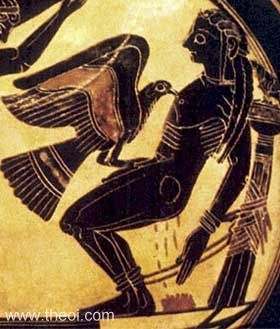
The title of the film is a not-subtle clue to the moral dimension of the story of the mission of the spaceship Prometheus, a sparsely-crewed vessel travelling through space to a planet outside of our solar system to where all the prehistoric clues of primitive man on earth point tantalisingly and cypherously towards the fact behind creation myth. When you try to get knowledge that is beyond your ken, you will be burnt (or rather, chained to a rock in the Caucasus with adamantine bonds and have your regenerating liver pecked out by vultures). Where the crime of the Prometheus of Antique religion was the Titan's theft of the secret of fire from the Gods and his transmitting it to man, the crime of the crew of the eponymous spaceship of Scott's film is the attempt to 'steal' the knowledge of our origins through science. It's a theme Heidegger would have approved of. But that is where the philosophical gravitas begins and ends. It is a maguffin, a ponderous, oppilating set-up to the alien-based action, which is the 'burning' of the aforesaid moral.
The writers of Prometheus will have us believe that aliens, who look like hypertrophied marble statues of Greek gods, created man, promulgating every nebulous, mythological-fantastical guff ever uttered about the origins of man and technology on earth. Why they created man, we don't know. I suppose aliens is easier to believe than chance, and chance more than some other more veiled reason.
That Prometheus takes this line is unsurprising - because this is a prequel to Alien, let's be realistic - but to use it as the plot and theme of the film betrays the English origins of its creator. What do I mean? I mean that the fact of aliens creating us doesn't answer anything, and it is the most tantalising yet inelegant set-up to monster action that I have ever seen. One of the characters in the film pursues the tantalising line and asks, "So where did they come from?" Scott makes no serious attempt to discuss or even to reiterate this excellent question. Prometheus fails to be the philosophical film it sort of hints that it wants to be and instead resiles to macerate in the drool-juice of its own gormless pretension.
The action scenes are plausible, the tension decent (the classic 'monster-tracker' beepers of the first Alien films are retranslated as a more sophisticated piece of holographic kit, but they're still there) and Fassbender is good as this instalment's inevitable is-he-good-or-bad android.
This:

Isn't this:
Tuesday, 12 June 2012
Lionel Asbo: A story of England
The plot of Amis's latest sounds suspiciously like Barnaby Barford's artwork-narrative Big Win, reviewed here in April. Can anyone comment?
Saturday, 2 June 2012
Knut Hamsun's Growth of the Soil: a review
About a year ago I bought a house with my girlfriend - our first - and we decided to grow the garden from scratch. It was a new build, so the jardin was a clay mess, a crenellated turbid 'scape which would have furnished Otto Dix with enough material to fill in the blanks in his Alzheimered dotage.
This is what I did: I got rid of the detritus, the torn texile swatches of rubble-sacks, nails, breeze-blocks, bizarre twisted metal that looked as if it were from some autochthonous steampunk civilisation lost to history; I sowed out the stones and the rubble from the thinnest layer of soil-dust; I broke down the clay with my spade; I flattened out the craters from where the rubbish had been picked; I put down compost and sharp sand and fertiliser and grass seed; and - life came. Grass and earthworms and horrendous knotgrass and thistles and harlequin ladybirds ventured from the reclaimed wilderness. But it is my garden and I am happy.
I am Isak, forger in the wilderness, a rugged survivalist, a primitive ignorant of money and clock-time, but sympathetic to nature's time, the more fundamental time of organic life, regarding the changing seasons as my calendar and wrist-watch, completely attuned to the needs of the belly and the body, to man in his natural state, to the growth of the soil.

Yes, we at Burning Pyre also don't believe that soil grows, but what the fuck: Hamsun's book won him the Nobel Prize three years after its publication in 1917, back when the Prize was a Scandinavian gentlemen's club and before the word 'post-colonial' was coined.
By 1920, Hamsun had already written a swath of modernist texts, the most famous of which is Hunger, a book widely read today and arguably the bridge between dark Russian psychologism of the 19th century and the urban alienation of the 20th century. Like one of those writers, Celine, was later to do, Hamsun toured the US. To judge from Growth of the Soil, what he learned was hatred of money and love of the countryside.
So Hamsun wrote a novel about man in his totally natural, ahistorical state, what Spengler meant when he referred to the prehistoric skirmishes of the Cherusci or the Wolofs as a fight between ant colonies. History does not begin until there is a written chronicle; it falls away where there is no need for one. This is the ahistorical world of Isak.

- Some soil, yesterday
Of course, this doesn't mean that the novel is without events. Like the earth, the story moves through its own seasons, beginning with a preface redolent of 'spring', in which Hamsun explains how Isak created a simple dwelling and began to live off the land. Through Isak's determination and his own labour, he builds instead of mud a house of wood, buys livestock and settles down with a female who wanders onto his land, a woman called Inger, afflicted with a hare lip, but a modest companion and a hard worker.
Together, Isak and Inger start a family and all is fine until Inger births a daughter with a cleft palate. In true Aktion T4 style, she strangles it. In Hollywood, this would be the real opening of the story, the point at which the city-dwelling audience, torpid but unsated by an infinity of pleasures, ever-envious of what everyone else has, achieves the satisfaction it had been waiting for when it bites into the delicious apple-shaped schadenfreude of trouble in rural paradise. In Hamsun, Inger's cruel act is the hard fact of human nature that people are driven by desperation to do terrible things.
The murder is a doorway to the real theme of the novel, one close to Hamsun's heart and one increasingly difficult to grasp in the ever-urbanising West of the 21st century. Inger is imprisoned and returns home after a lengthy spell in the city prison, miles and worlds away from the remote rural setting of her Isak and her sons, with her cleft lip corrected, a daughter and, most crucially, a new Weltanschauung. Gone is the demure inverted-ingenue Inger, who displays the features of Hamsun's ahistorical tapestry of 'spring'; in her place is someone else, someone different - a self-conscious Inger, a world-weary, jaded Inger, a physically improved but morally degraded Inger, who feels herself above the work she had performed before she was incarcerated.It takes an act of gentle physical persuasion from Isak to set her back in her place with him. Inger withdraws and finds religion, but also re-assesses her values and falls in love again with Isak, the simple, plain master of the wilderness now called Sellenra. Strangers, opportunists come and go; the seasons metaphorically embedded in the narrative (Struggle - spring; enjoyment of fruits of labour - summer; upset - autumn; and the dark night of the soul - winter) cycle about like spokes on the wheel of Hamsun's narrative. What remains after everything is the strength of the growth of the soil - the power of land and toil.
Hamsun's tone, his on-and-off use of the present tense, evokes oral storytelling, the primary art of the ancient (pre-classical) Greeks and Celts and the timeless conduit of fables and proverbs. As a tale of rustic folk and the homestead it is as close as the late art of the West comes to a prose Hesiod. The first translator of the book, W Worster, said that 'a more objective work of fiction it would be hard to find.' The matter-of-factness of Hamsun's narrator, his description of the characters' feelings couched in conversational speculations but never demeaning them, pointed to a different kind of fate for Western literature, one which is echoed in the flatness of his partial-contemporary Hemingway's prose, but which never gathered enough pace to attack the muggy but creative psychologism of Joyce, the synaesthesia of Dos Passos and the ornate factual-fictional reminiscences of Proust. Growth of the Soil is anti-Impressionist and anti-Expressionist. It is the literary equivalent of Henri Rousseau, and therefore late in the unified theory of Western art, but timely nevertheless. With the bloodiest, most destructive war in history finished just over a year before the Nobel Committee's decision to award a novel so hostile to the idea of the city and its money and machines, it is no surprise that this point would have been considered insensitive if not pernicious to a wounded Europe's need to look to idyllic alternatives.
Hamsun's skepticism about the war and civilisation later led him to sympathise with Germany over England, with the tenets of Blood & Soil over the dogma of Capital. He refused to repent after the second war. His books remain in print and widely translated, such is the force of his vision.
Hamsun's Nobel acceptance speech:
http://www.nobelprize.org/nobel_prizes/literature/laureates/1920/hamsun-speech.html
http://www.hamsun.dk/uk/
This is what I did: I got rid of the detritus, the torn texile swatches of rubble-sacks, nails, breeze-blocks, bizarre twisted metal that looked as if it were from some autochthonous steampunk civilisation lost to history; I sowed out the stones and the rubble from the thinnest layer of soil-dust; I broke down the clay with my spade; I flattened out the craters from where the rubbish had been picked; I put down compost and sharp sand and fertiliser and grass seed; and - life came. Grass and earthworms and horrendous knotgrass and thistles and harlequin ladybirds ventured from the reclaimed wilderness. But it is my garden and I am happy.
I am Isak, forger in the wilderness, a rugged survivalist, a primitive ignorant of money and clock-time, but sympathetic to nature's time, the more fundamental time of organic life, regarding the changing seasons as my calendar and wrist-watch, completely attuned to the needs of the belly and the body, to man in his natural state, to the growth of the soil.
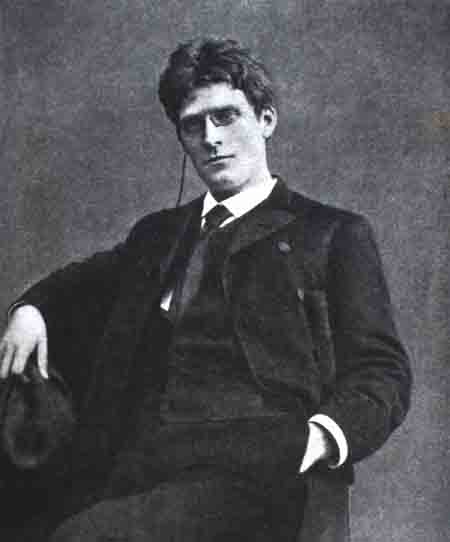
Yes, we at Burning Pyre also don't believe that soil grows, but what the fuck: Hamsun's book won him the Nobel Prize three years after its publication in 1917, back when the Prize was a Scandinavian gentlemen's club and before the word 'post-colonial' was coined.
By 1920, Hamsun had already written a swath of modernist texts, the most famous of which is Hunger, a book widely read today and arguably the bridge between dark Russian psychologism of the 19th century and the urban alienation of the 20th century. Like one of those writers, Celine, was later to do, Hamsun toured the US. To judge from Growth of the Soil, what he learned was hatred of money and love of the countryside.
So Hamsun wrote a novel about man in his totally natural, ahistorical state, what Spengler meant when he referred to the prehistoric skirmishes of the Cherusci or the Wolofs as a fight between ant colonies. History does not begin until there is a written chronicle; it falls away where there is no need for one. This is the ahistorical world of Isak.
- Some soil, yesterday
Of course, this doesn't mean that the novel is without events. Like the earth, the story moves through its own seasons, beginning with a preface redolent of 'spring', in which Hamsun explains how Isak created a simple dwelling and began to live off the land. Through Isak's determination and his own labour, he builds instead of mud a house of wood, buys livestock and settles down with a female who wanders onto his land, a woman called Inger, afflicted with a hare lip, but a modest companion and a hard worker.
Together, Isak and Inger start a family and all is fine until Inger births a daughter with a cleft palate. In true Aktion T4 style, she strangles it. In Hollywood, this would be the real opening of the story, the point at which the city-dwelling audience, torpid but unsated by an infinity of pleasures, ever-envious of what everyone else has, achieves the satisfaction it had been waiting for when it bites into the delicious apple-shaped schadenfreude of trouble in rural paradise. In Hamsun, Inger's cruel act is the hard fact of human nature that people are driven by desperation to do terrible things.
The murder is a doorway to the real theme of the novel, one close to Hamsun's heart and one increasingly difficult to grasp in the ever-urbanising West of the 21st century. Inger is imprisoned and returns home after a lengthy spell in the city prison, miles and worlds away from the remote rural setting of her Isak and her sons, with her cleft lip corrected, a daughter and, most crucially, a new Weltanschauung. Gone is the demure inverted-ingenue Inger, who displays the features of Hamsun's ahistorical tapestry of 'spring'; in her place is someone else, someone different - a self-conscious Inger, a world-weary, jaded Inger, a physically improved but morally degraded Inger, who feels herself above the work she had performed before she was incarcerated.It takes an act of gentle physical persuasion from Isak to set her back in her place with him. Inger withdraws and finds religion, but also re-assesses her values and falls in love again with Isak, the simple, plain master of the wilderness now called Sellenra. Strangers, opportunists come and go; the seasons metaphorically embedded in the narrative (Struggle - spring; enjoyment of fruits of labour - summer; upset - autumn; and the dark night of the soul - winter) cycle about like spokes on the wheel of Hamsun's narrative. What remains after everything is the strength of the growth of the soil - the power of land and toil.
Hamsun's tone, his on-and-off use of the present tense, evokes oral storytelling, the primary art of the ancient (pre-classical) Greeks and Celts and the timeless conduit of fables and proverbs. As a tale of rustic folk and the homestead it is as close as the late art of the West comes to a prose Hesiod. The first translator of the book, W Worster, said that 'a more objective work of fiction it would be hard to find.' The matter-of-factness of Hamsun's narrator, his description of the characters' feelings couched in conversational speculations but never demeaning them, pointed to a different kind of fate for Western literature, one which is echoed in the flatness of his partial-contemporary Hemingway's prose, but which never gathered enough pace to attack the muggy but creative psychologism of Joyce, the synaesthesia of Dos Passos and the ornate factual-fictional reminiscences of Proust. Growth of the Soil is anti-Impressionist and anti-Expressionist. It is the literary equivalent of Henri Rousseau, and therefore late in the unified theory of Western art, but timely nevertheless. With the bloodiest, most destructive war in history finished just over a year before the Nobel Committee's decision to award a novel so hostile to the idea of the city and its money and machines, it is no surprise that this point would have been considered insensitive if not pernicious to a wounded Europe's need to look to idyllic alternatives.

Hamsun's skepticism about the war and civilisation later led him to sympathise with Germany over England, with the tenets of Blood & Soil over the dogma of Capital. He refused to repent after the second war. His books remain in print and widely translated, such is the force of his vision.
Hamsun's Nobel acceptance speech:
http://www.nobelprize.org/nobel_prizes/literature/laureates/1920/hamsun-speech.html
http://www.hamsun.dk/uk/
Sunday, 20 May 2012
Romanzo Criminale: La Serie 1 – a review
To judge from the credits alone - brief glimpses of shades-wearing men having seedy conversations; shots of wads of lira; guns - RC is either a shitty cheesy crime drama set in the 70s in the vein of the Professionals, or a cool Goodfellas-style fast-paced anthropological study of Italian crime in Italy. Even the promo photo looks shit. Happily, this story of the real-life Banda della Magliana is neither; fortuitously, it is the greatest TV programme maybe ever.

It is a bildungsroman of a gang, centring on its leader, small-time hood Lebanese, who lives in a small caravan by the Tiber. Inevitably, he forges alliances with local hoods and runs risks with dogged determination as they come up against better-connected foes and the sinister Camorra. So far so Scarface. But we who know little about the Banda in advance of its screening are never given the sense that their rise to power will be inevitable in the same sense as a Hollywood gangster epic. Limited by their running time, the big screen bildungsroman defaults to vignettes, presenting the trajectory of character in a single unvarying gradient, always seeming like an abridged biography retold by an omniscient narrator. Romanzo Criminale's format, whilst conforming to type with its 12 intriguing introductions and 12 cliff-hanger endings, allows many twists and set-backs and seems much closer to a geniune thriller than a morality tale, which is effectively what Scarface, Goodfellas, et al. are. In fact, the gang's transition from small-time hoodlumry to the big stage establishes once and for all supremacy of the novel and the TV series over story, film and stage in matters of exposition.
Most interesting is the fact that RC is set during Italy's anno di piombi. This is the most triumphant detail in the series. The historical gravitas of Italy's torrid recent past elevates Criminale way, way above run-of-the-mill crime dramas and makes HBO centrepieces like the Sopranos look like a dreary soap-opera and Life on Mars like the fantasy it is (people with no historical sense have compared it to both). The series begins like the flashbacks in Godfather Part 2 and hits another level when Aldo Moro is kidnapped by the Red Brigades. It is the crucially-important historical backdrop which makes the Italian state itself - in the form of the shady secret service, the identity of whose acolytes we see interspersed throughout the series, is only very slowly revealed - complicit in breaking the rule of law in exactly the same way as the Banda did. They are morally equivalent, these murdering thieves from the poor part of Rome and the security service, the writers tell us. The facts bear out the claim.
BP wasn’t alive to experience the 1970s in Italy, so we will refrain from posturing about its historical authenticity, but it looks and feels like a different, grubbier, less technologically sophisticated era and one familiar from archive footage. We know that the 1970s in Western Europe saw serious threats to the established order in the form of Communism, trade unionism, terrorism (Red, Black and anti-colonial) and, perhaps most of all, the Yom Kippur War and the resulting oil crisis of 1973. The piece of the pie seemed to get smaller across the West. A new, grubbier realism set in after the optimism of the 60s. It even saturated Hollywood. Watergate happened. Baader-Meinhof were running crazy across West Germany. The British army were shooting civilians in Ulster. Men were dressing up as women and pretending to be space aliens with 1950s’ licks. The US pulled out of ‘Nam, unable to defeat a determined army of peasants with AKs. Were the liberal values of the West falling apart? Was Communism going to take over?
The Years of Lead as presented in Criminale show the audience that Italy, far from being the land of fashion, pasta and football familiar to English-speaking contemporaries, was - is - an intensely political nation divided, like much of Europe, into three camps by its reaction to Anglo-capitalism. Firstly, the left, the Red Brigades and Anarchists, who kidnapped and murdered the Prime Minister of Italy, Aldo Moro in 1978 (we are given a glimpse of this through Inspector Scaiola's relationship with his Red sister); then the right, the fascists and Mussolini revivalists, whom we see when the fascist adventurer Nero (brilliantly played by an Iggy Pop lookalike) needs someone to launder his money; and finally, the centre, the dominant party of acquiescent capitalists after the fall of Mussolini, typified by Berlusconi. It is in the centre where the Banda (in spite of its links to NAR) and their nemesis Inspector Scaiola exist. The Banda believe in money, Scaiola in reason, together the two values uniting the centre faction: capital and law, the means of enforcing capital. By contrast, the secret service seem like out-of-control puppet masters, unsure which marionette to play with more. According to the producers, they played the Banda over Scaiola and the Right over the Left. But they don’t want more money and, as far as we can tell, they don’t want a second Duce.

The dichotomy between rifht and left resolved itself and the Years of Lead ended, but not before 85 people were blown up in Bologna. So, what of the era hinted at by the end of the first series of Romanzo? Governments calmed down, or got better at covering themselves up. The populace was tired of terrorism and pacified by the financial boom of the 1980s. Liberal markets triumphed across most of the world in 1991; Kojeve’s end of history thesis came to fruition. Francis Fukuyama updated it with an audacious piece of backwards clairvoyance. Markets opened up to freer trade. Governments trusted each other to be more predictable than in the 70s and real political choice between Red, Black and Centre was replaced with consumer choice. Companies, too, reacting to legislation to better secure national income, sought to make revenues more predictable, employing Black-Scholes and the personal computer to master the future and conquer risk (suggested further reading: Galbraith’s Affluent Society).
We live in a world a start-up Banda would have dreamed of – the approval and promotion of crass materialism, the ability to get-rich-quick and the chaos of globalisation as a smoke screen for their underworld activity. If the NAR or the CPI had got into power, they would have been toast.
More on the Banda:
http://en.wikipedia.org/wiki/Banda_della_Magliana
Monday, 14 May 2012
Change.org: coming to a protest near you, UK
Link.
Commentators will be quick to assess the importance and the magnificence of an online petition system which can – and has – drummed up support for initiatives as diverse as opposing Bank of America, obtaining support from Apple for its Chinese workforce and ensuring that lynchmob justice prevails in the bizarre Trayvon Martin case.
Yes, the selfsame commentators who laud the arrival of the phenomenon on these shores I doubt will like to see the millions of signatures appended to populist petitions for member states to quit the EU (now inevitable), for death sentences to be handed out to child killers and for immigration to be stopped dead.
Democracy – genuine democracy, i.e., populism – is a rollercoaster and must not be confused with our current staid system of politics. I’m talking about managed democracy, with its quinquennially-elected professional politicians, who are under no obligation to vote how their constituents want them to, which is like a centrally-planned version of democracy in a similar way that ‘managerial capitalism’is the centrally-planned version of entrepreneurial capitalism.
As the internet is a threat to managerial capitalism, so change.org could be a threat to managed democracy.
But if they think they can waltz into China they’ve another thing coming.
Thursday, 10 May 2012
The New Arcades Project
Burning Pyre is sick of the serviette badinage which passes for trench warfare between modern
media talking heads. We’ve read of the time when men would beat and shoot each
other to death over their opinions, viz. 1919:
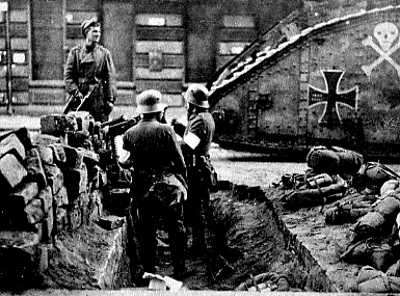


What are we trying to say, ever so clumsily? That the cultural commentator
and artist should stop whispering behind his napkin, embarrassed by a ballsy opinion, and
say something real.
The New Arcades Project is an attempt to understand – hell:
appreciate – art, politics, philosophy, history, economics, etc, etc, within a fragmented
narrative context which is not history, but nevertheless seems like history.
The rise of new media means that a new understanding can be developed which is
not based in the art gallery or in the venerable book (which we continue to
venerate, Amazon’s space-saving toy be damned) and, thanks to its brevity, need
not be monotonically classicist or Marxist or fascist or capitalist or –ist at
all. It can interweave competing, fragmented narratives to present a
mosaic-like picture of events. It is the theory of history for an over-intellectualised, over-stimulated, over-fed generation who do not know what war or political rioting is, but who wish to understand the past more viscerally and without regard to political correctness or narrative structure than a million History Channel reconstructions, based on a phenomenological bootstrapping of personal experience to general, 'public' experience.
What the fuck does this mean?
Subscribe to:
Posts (Atom)